

Have you ever had a student who memorized the order of a file folder activity instead of learning it? I have, plenty of times. It’s common with students with autism.
I used to have a student who could finish all his worksheets and file folders in 1 minute flat. Because he knew all the answers and didn’t even have to look at the pieces.
So instead of learning to add the numbers, the student memorizes the answer. That’s fine if it’s a worksheet they’ll do once. It’s a real problem when you’re building file folder activities for autism that you want to reuse in your independent work systems.
In an earlier post on designing tasks for work systems, I mentioned this briefly. But it’s worth slowing down on by itself, because it changes how you build a task.
Why Memorizing the Answer is a Problem in your Work Systems
When a task is part of a work system, the whole point is that the student practices a skill independently, over and over. If they’ve memorized where the pieces go, they’re not practicing the skill. They’re practicing the sequence.
You want to be sure the student is attending to the thing you actually care about — putting the numbers in order, reading the word, adding the problems — and not just memorizing where each piece lands.
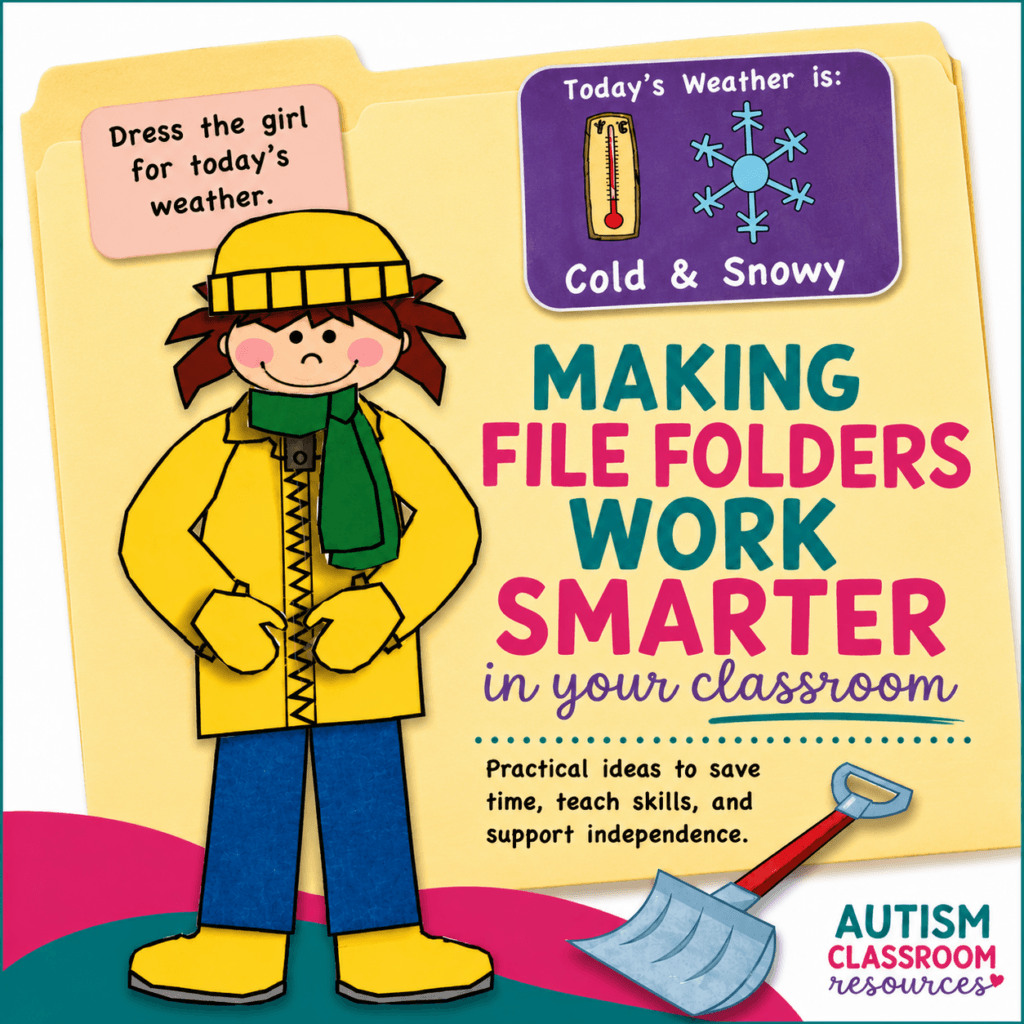
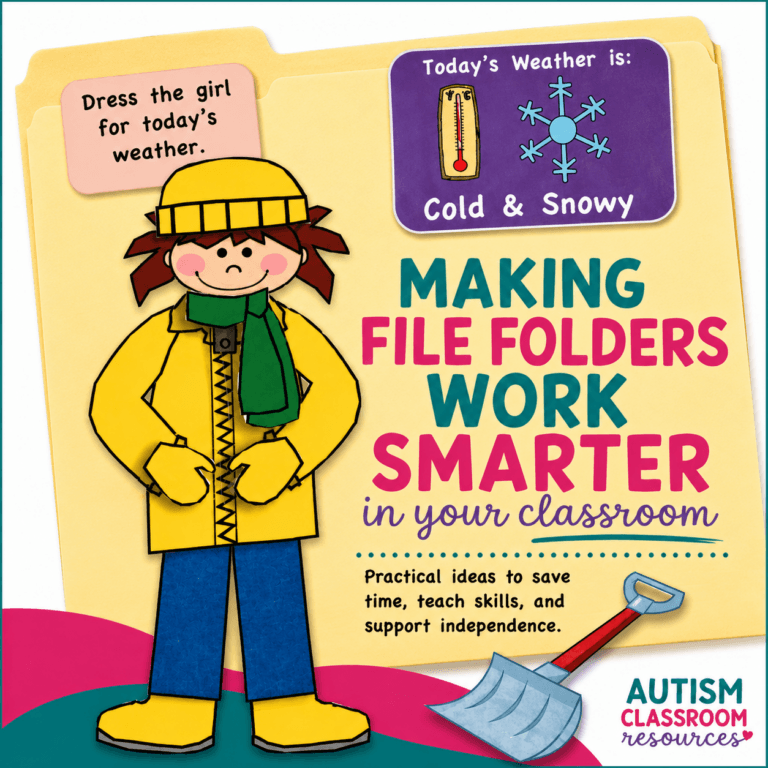
This is why I made Weather Kids the way I did. They change with the weather each day, so the student dresses the character for what’s actually happening outside. And yes, even in Florida the weather changes.
Stimulus Overselectivity: The Reason This Happens
There’s a name for what’s going on here. It’s a feature of autism called stimulus overselectivity, and it means the student picks up on a non-key detail in the materials instead of the one you want them to notice.
Here’s a common example. Say you have a task matching color words to colors — the word “blue” goes with the color blue. If you print the word “blue” in blue ink, the student can match it without reading a thing. They’re matching color to color, not word to meaning.
So the materials need a second look. The detail that’s easiest to lock onto isn’t always the detail you’re teaching.
How to Build File Folder Activities They Can’t Just Memorize
The fix is to set up your materials so they change. When the arrangement shifts, there’s no fixed answer to memorize, and the student has to do the actual skill each time.
A few ways to do that:
Velcro the bottom layer instead of gluing it down. On a matching file folder, glue locks the pieces in one spot forever. Velcro lets you move them around so the layout changes every time the student opens it. It also lets you change how many items the student has to complete, so the same folder grows with them over time.
Swap the content and keep the questions. If a student is working on reading comprehension, change out the story or passage but keep the questions consistent — who is the main character, what happened first. The skill stays the same; the answer can’t be memorized.
Watch for the color trap. Going back to the color-word example: don’t print the word in its matching color. If “blue” is written in blue ink, you’ve handed the student a shortcut around reading.
A Real Example and Why it Still Works
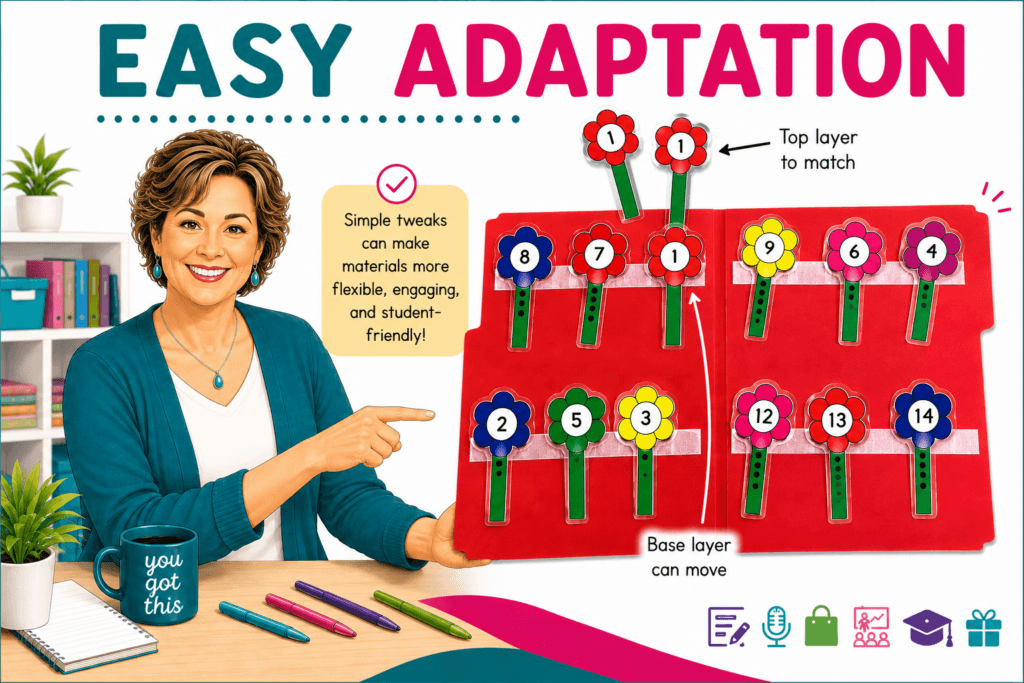
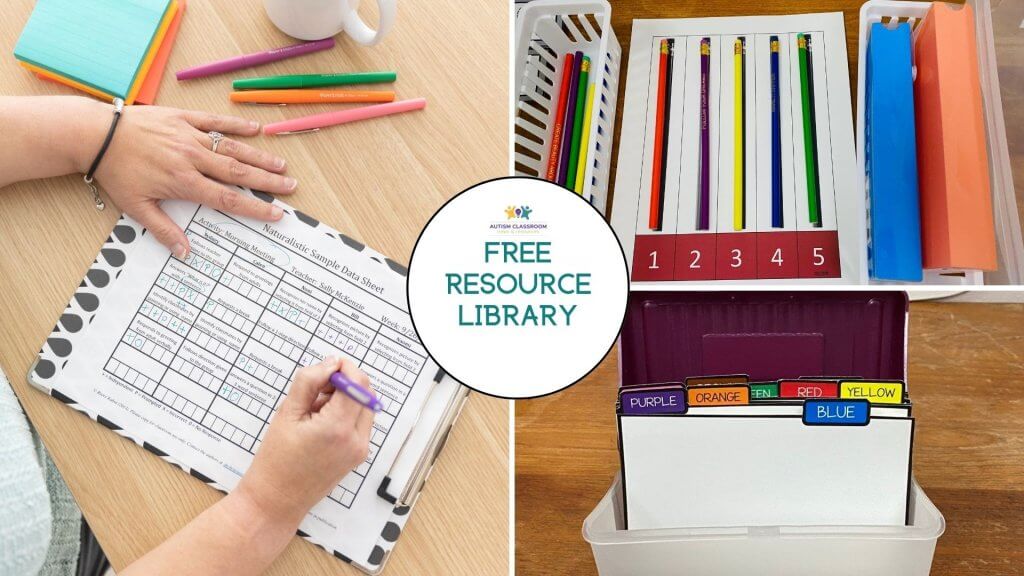
This file folder is from Childcare Land, one of many early childhood folders you can buy, print, and assemble in color or black and white. The bottom layer is velcroed to the folder so you can move the pieces around.
Now, there’s a wrinkle worth noticing. The colors of the flowers vary with the numbers, so 1 always matches to red. On its own, that’s the kind of thing that could let a student match by color instead of number.
But look closer: 7, 6, 12, and 13 are red too. So color can’t be the only thing the student is going off of. They still have to attend to the number. That’s the kind of small check worth doing on any task you’re about to reuse.
The Quick Gut Check Before You Laminate
Before a task goes into a work system, ask one question: is there any way to finish this without doing the skill I’m teaching?
If the answer is yes — a color cue, a fixed order, a layout that never moves — adjust it before you laminate. A few minutes up front buys you a task you can reuse for months without the student quietly memorizing their way around it.