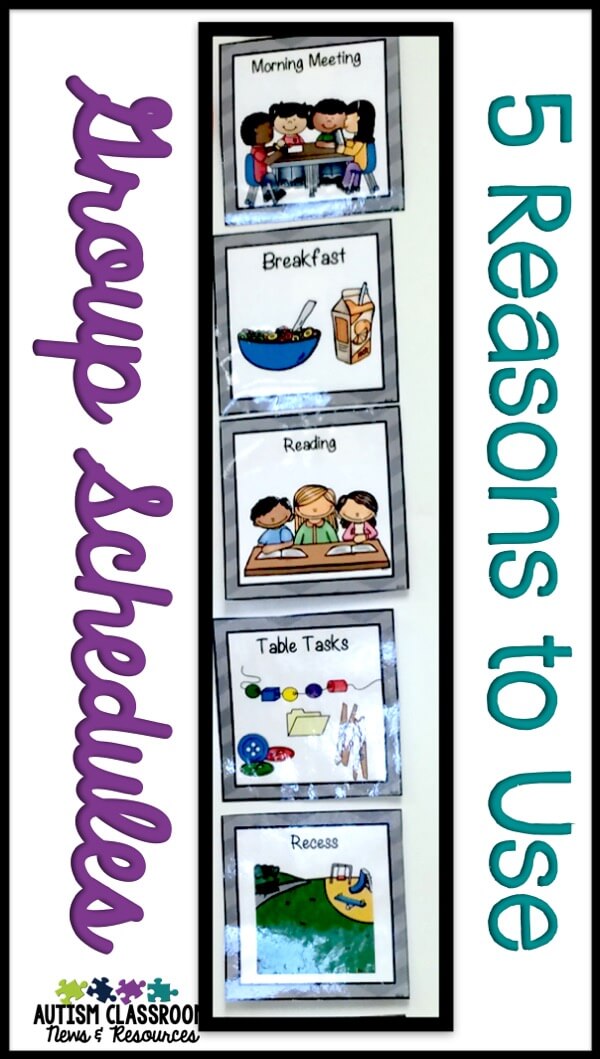
Visual Schedule Series: 5 Reasons to Use Group Schedules
Group schedules are more important than most classrooms realize for showing the activities of the whole class. Learn what they are and why they are important from a BCBA-D with more than 30 years experience.
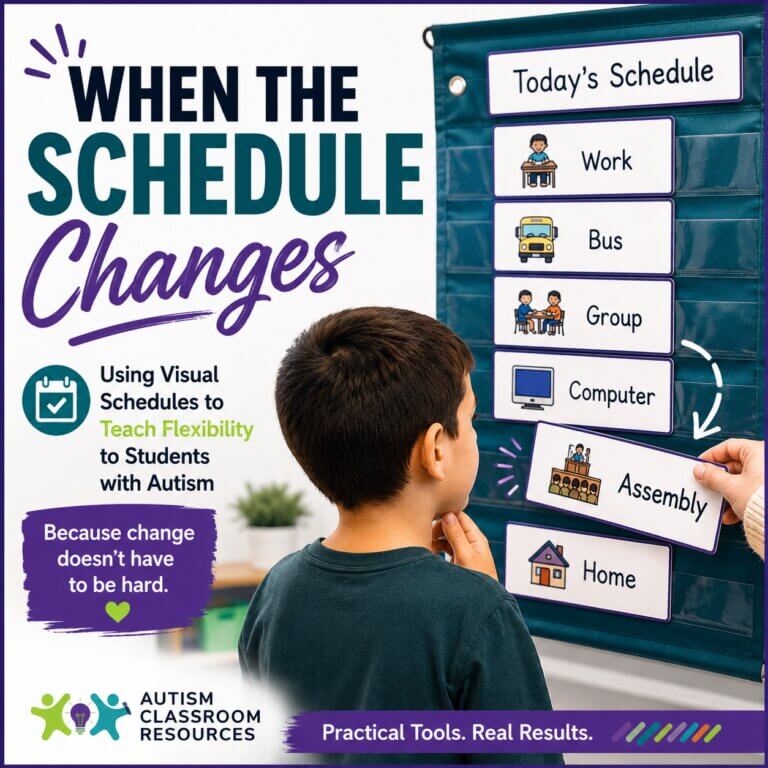
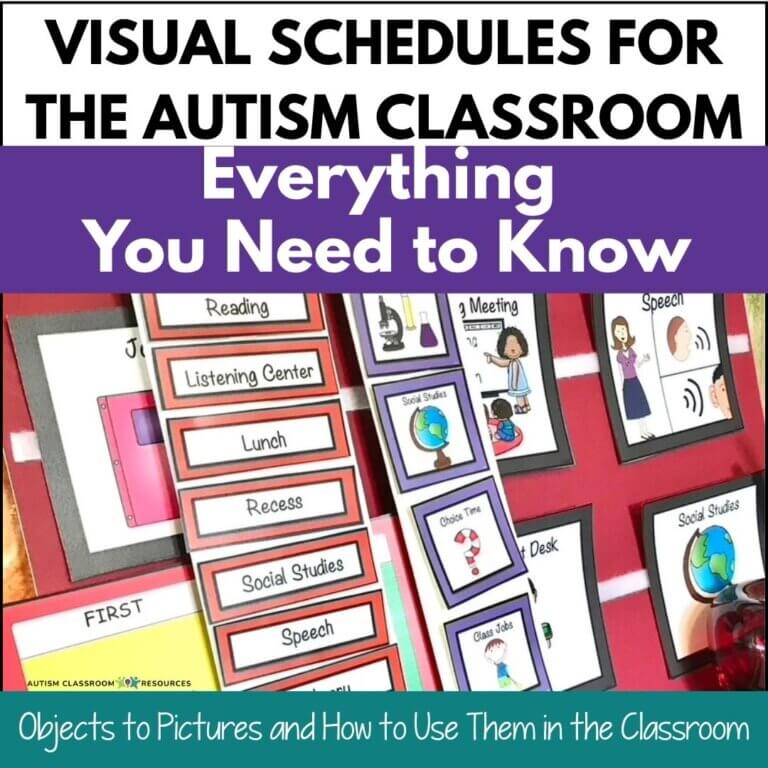
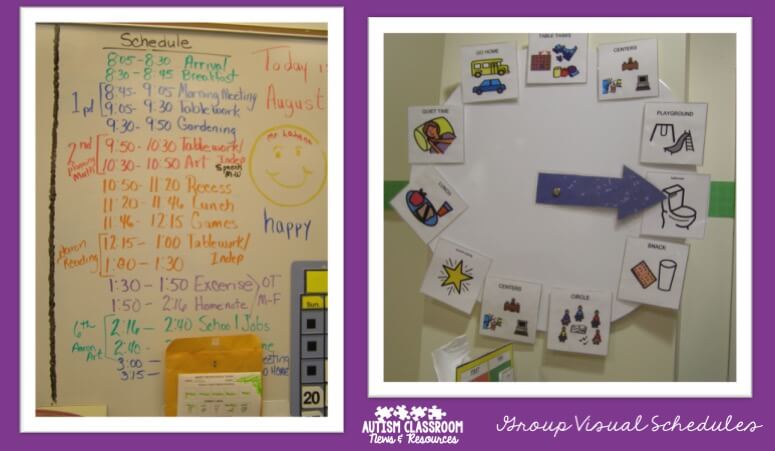
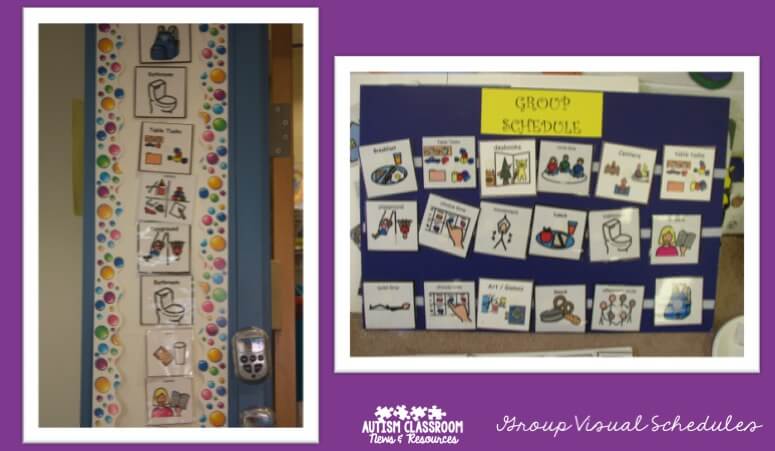
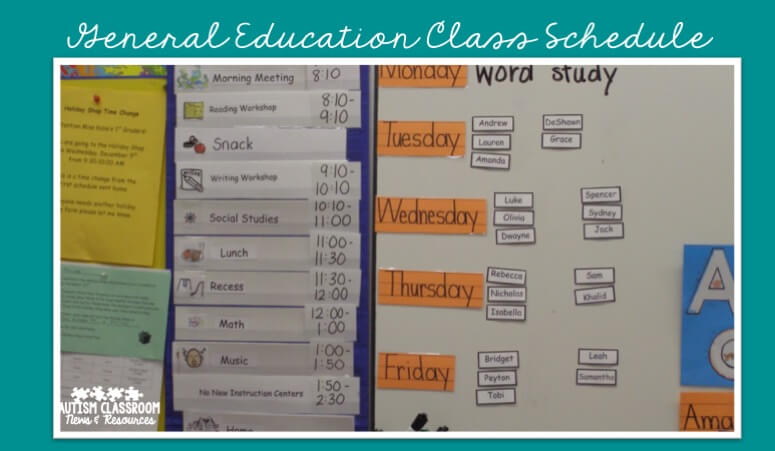
Group schedules are a way to demonstrate what the whole class is doing. They are frequently used as best practice in general education classrooms, particularly in the younger grades. Usually in general education classes they are written schedules. However, when you think about the fact that most kindergartners are just learning to read, pictures in these settings make sense.
I find in self-contained environments, teachers tend to forget the importance of the use of a group schedule. I remember training with a colleague years ago that we pulled from the school to do training in another district. Her regular job was mentoring teachers in autism classrooms. As she was doing the training on visual supports, she suddenly stopped talking. I asked her later why and she said she had just realized that her teachers weren’t all using group schedules and she had forgotten how important they are to a classroom.
Forms of Group Schedules
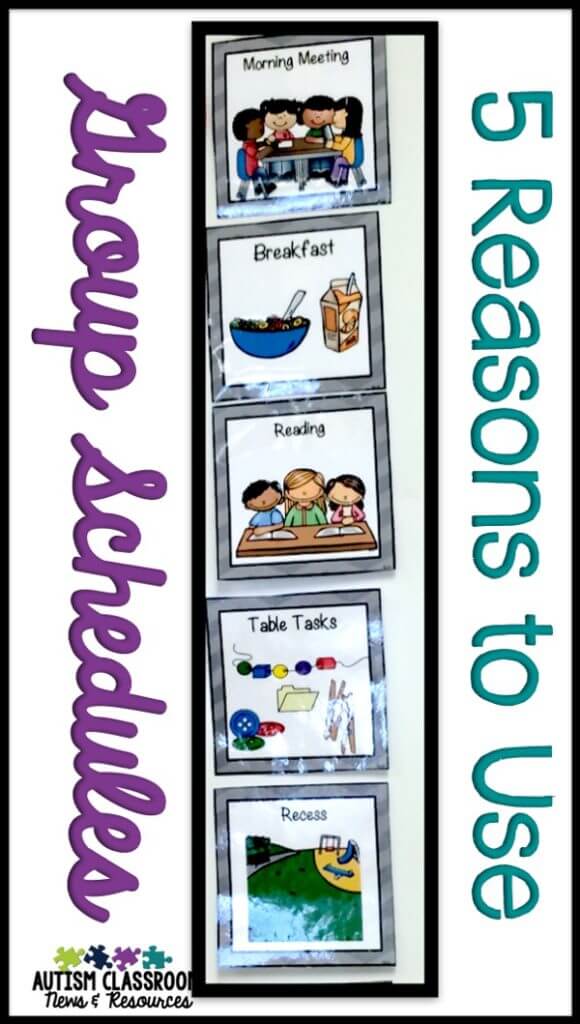
Group schedules can take lots of forms. Typically they are either written or pictures of some type. Sometimes they are part of the morning meeting routine to review the schedule, sometimes they are at the door so they get checked at transitions, and sometimes they are done with times on them or like a clock. The key to construction is just matching it to the needs of the students. For instance, the clock schedule is going to be more difficult for a child just learning time and sequence to follow than the schedules that goes left-to-right or top-to-bottom. As I noted in a previous post, top-to-bottom organization is better for developmentally younger students.
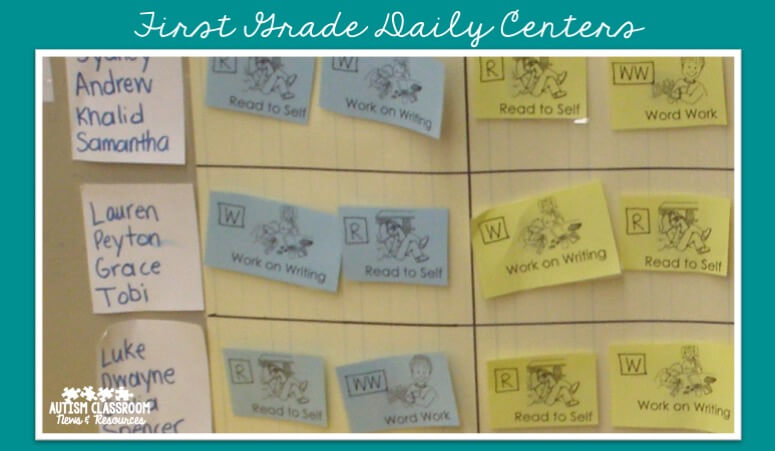
One of the questions people often ask about the use of group schedules is what to do with them when the students are doing individual activities, like centers. We solve that problem by making center schedules with more than 1 picture on them. The students’ individual schedules then tell them the order of the center activities.
5 Reasons You Need to Use Group Schedules
So, if you have been reading this series, you may be asking, “If all my students have individual schedules, why would I need a group schedule?” That is an excellent question! Here are the top 5 reasons why it is important to use group schedules!
It allows you to review the schedule regularly with the whole class to let them know what is coming next. We often review group schedules during morning meeting, to talk about the upcoming day, and then review them by turning finished activities’ visuals over and talking about what comes next.
It provides a visual support for students to talk about their day. When we review the schedule at the end of the day or throughout the day, we review what we did. This is a great language building activity to work on talking about what they did today.
It helps students learn time and sequence and embeds the review of the sequencing into the daily routine. You can also talk about what the whole class did and what the individual students did.
It provides a reference for the staff and the students to know the overall scope of the day at a glance by looking at a central location for the schedule with larger visuals. Finding what is happening next on individual schedules is sometimes difficult to do from across the room because the visuals are smaller. A central group schedule with larger visuals is easier to reference for everyone throughout the day.
Finally, and probably most importantly, it helps to build independence and provide a transitional support. Ultimately, we would love for all our students to be able to navigate their daily routine in the same manner as their age-appropriate typical peers. Typical peers have some type of daily group schedule that they follow. Their kindergarten or first-grade classroom may have a daily schedule that shows them their day with a center schedule for the Daily Five–like those below. A high school chemistry teacher might have a written list of tasks for the class to complete or review the schedule orally. The use of a group schedule in a self-contained classroom helps students to reference the natural cue of a schedule in other classroom settings. Eventually it may be possible to fade a student using a full-day schedule to following the group schedule with just a center schedule for the activities that are done individually. Having the group schedule provides a scaffolding to be able to build these skills and move more toward the natural environment.
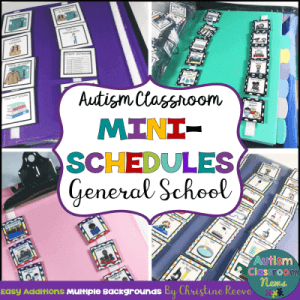
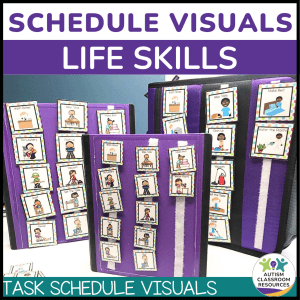
So that gives you a taste of the way individual schedules can be used and the variety. In the next post I will show you some mini schedules for routines. In the meantime, check out my visual schedule bundles for all ages on TPT if you are interested the schedules that you have seen in some of the pictures.
Visuals in the Store or TpT
“Autism Classroom Mini-Schedules for General School Activities” has been added to your cart. View cart
Unlock Unlimited Access to Our FREE Resource Library!
Welcome to an exclusive collection designed just for you!
Our library is packed with carefully curated printable resources and videos tailored to make your journey as a special educator or homeschooling family smoother and more productive.


![Visual schedules and supports kit. elementary and Preschool. Solid backgrounds. Print only the images you need. [picture includes word cards without pictures, individual picture schedule cards, and large picture schedule card for checkin and group schedules.]](https://autismclassroomresources.com/wp-content/uploads/2022/06/Solid-Color-Visual-Schedules-Kit-Thumbnails-1396222-7-27-24-300x300.jpg)